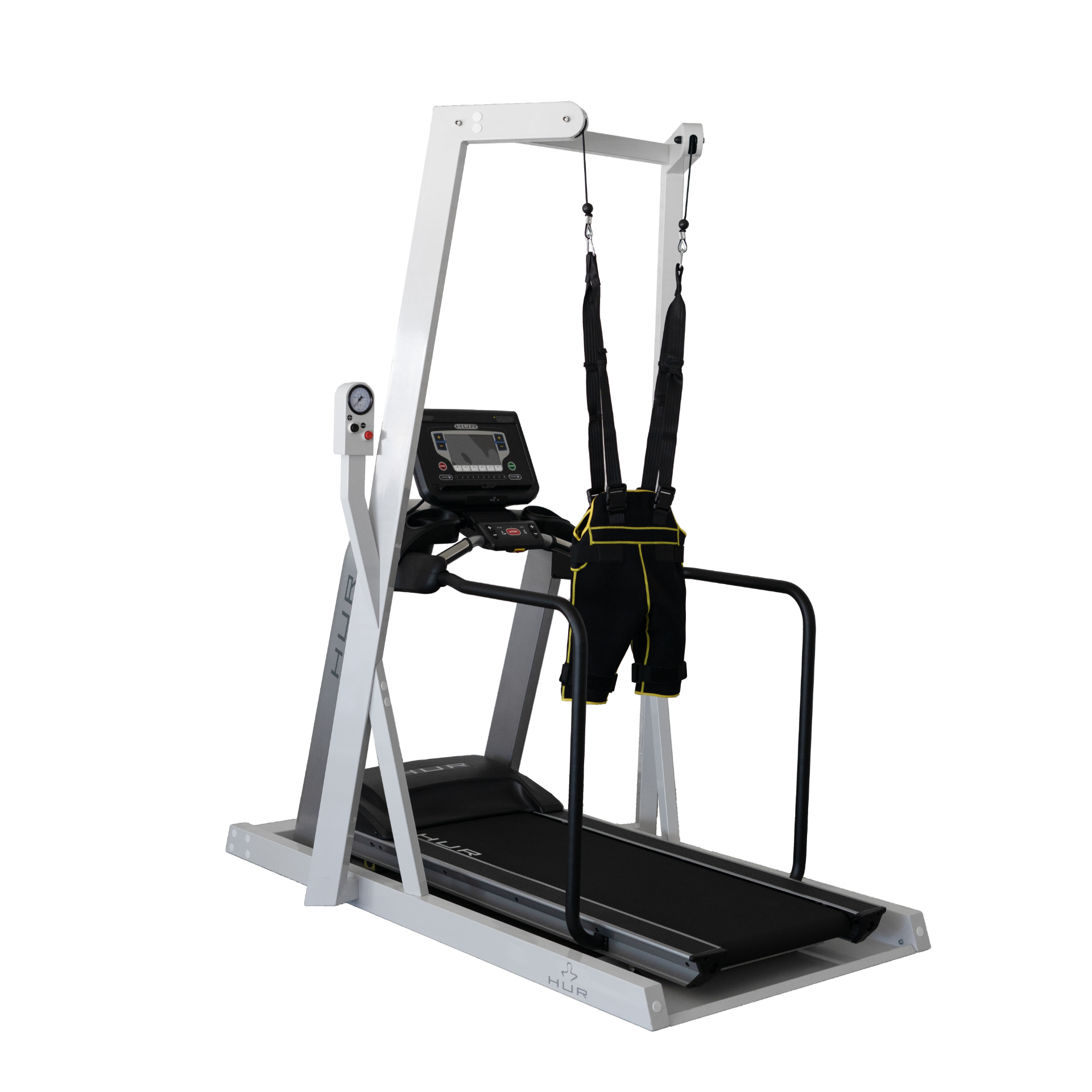
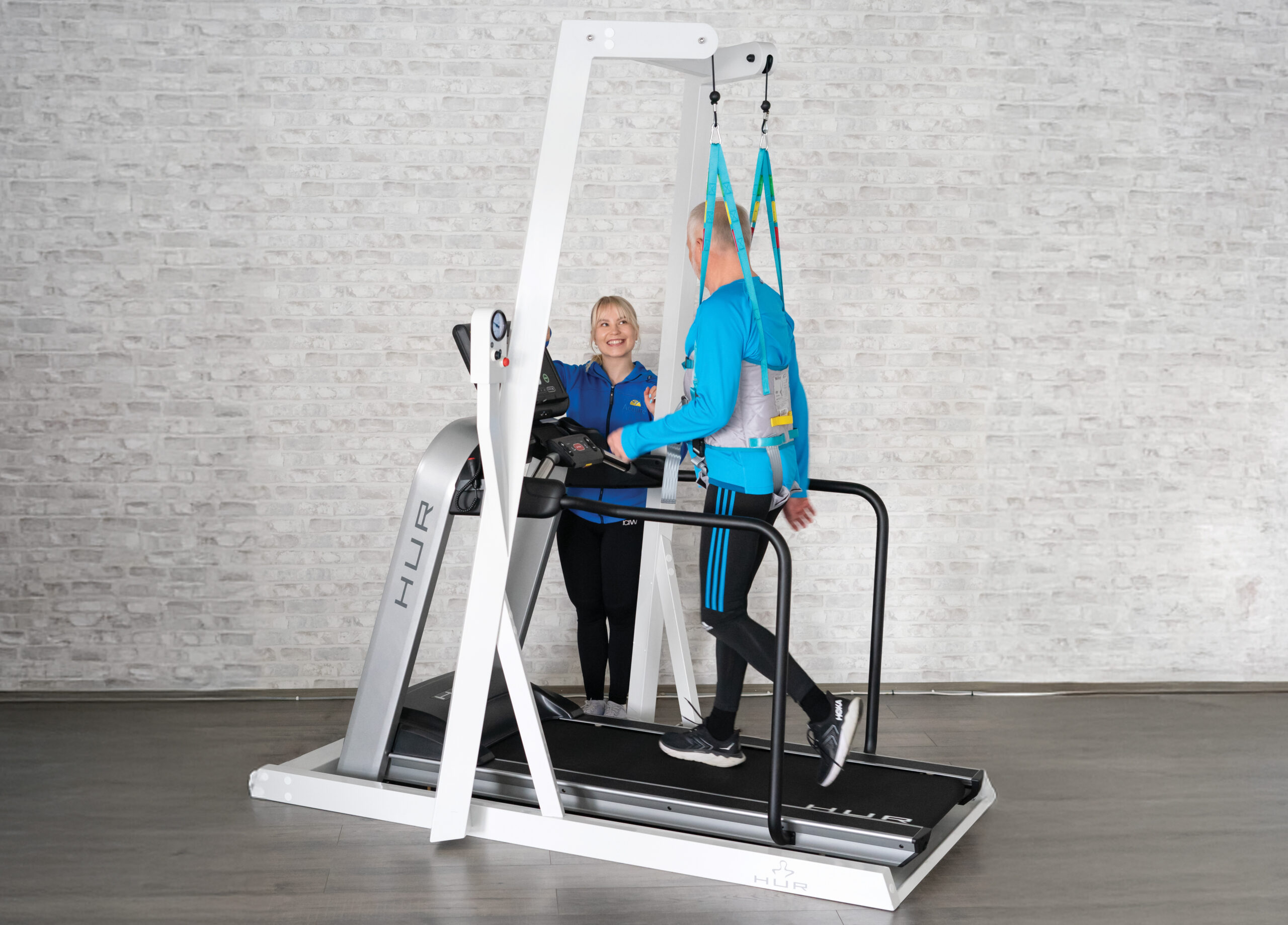
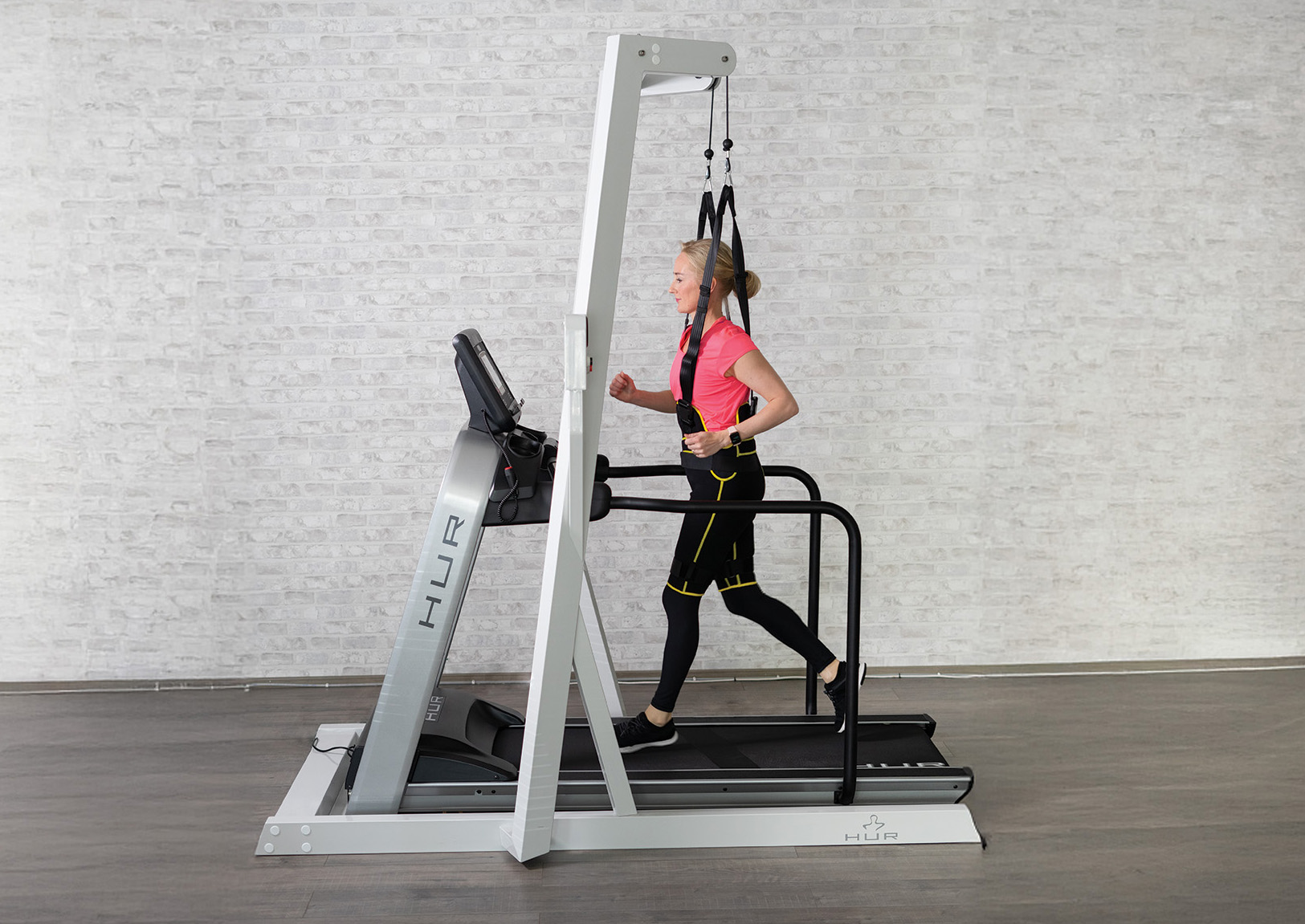
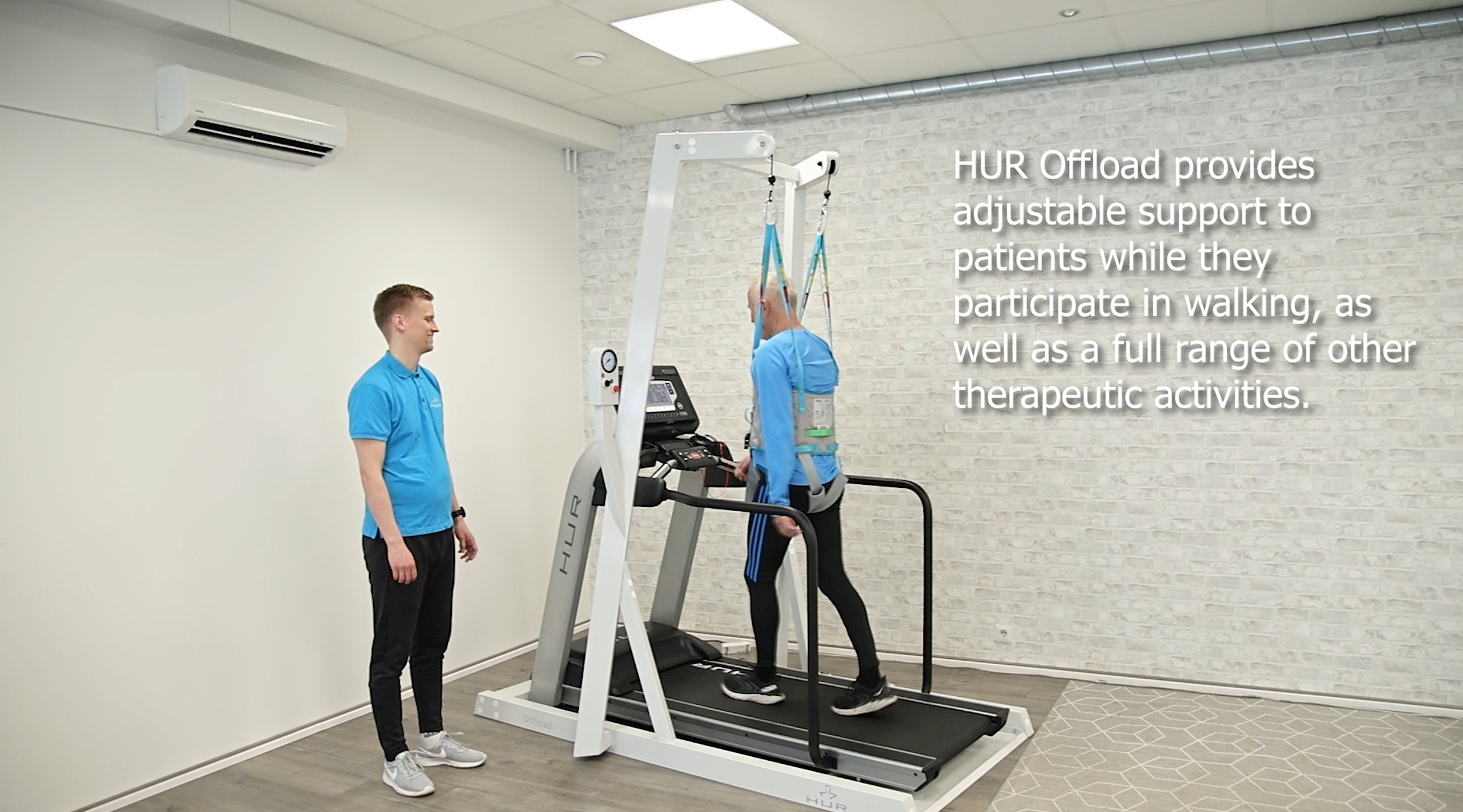
The HUR Offload is a state-of-the-art unweighing system powered by air pressure, designed to provide adjustable support for patients during walking and a wide range of therapeutic activities. By reducing the patient’s body weight, it allows individuals to engage in rehabilitation exercises earlier and more safely, enhancing both mobility and recovery in a secure environment.
The unique two-rope system of the HUR Offload delivers enhanced support and stability, allowing patients to perform movements such as turning sideways or backward without compromising safety or balance. This feature ensures patients can regain functional movement with confidence.
Additionally, the open design of the HUR Offload enables therapists to maintain full access to the patient’s lower extremities, making it ideal for a variety of therapeutic exercises.
Available in two different heights:
6100 HUR Offload – Low Frame
Standard: 149 × 236 × 231 cm (59 × 93 × 91 in) | 117 kg (258 lb) | Max treadmill width 95 cm (37 in)
Wide: 169 × 236 × 231 cm (67 × 93 × 91 in) | 125 kg (276 lb) | Max treadmill width 115 cm (45 in)
6102 HUR Offload
Standard: 149 × 236 × 259 cm (59 × 93 × 102 in) | 120 kg (265 lb) | Max treadmill width 95 cm (37 in)
Wide: 169 × 236 × 259 cm (67 × 93 × 102 in) | 128 kg (282 lb) | Max treadmill width 115 cm (45 in)